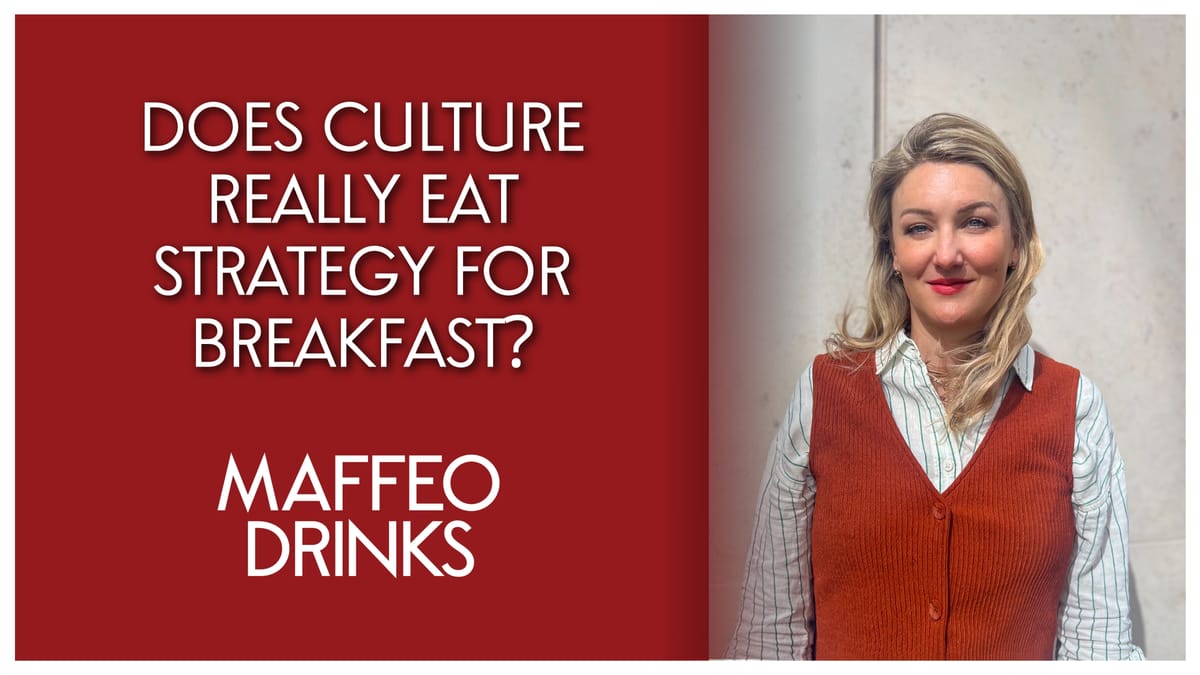
Does Culture Really Eat Strategy for Breakfast? How Matilda Andersson uses the 4Cs Framework to Bridge Gut-Feel Insights with Rigorous Research
From The MAFFEO DRINKS Podcast: Matilda Andersson reveals why consumer research alone keeps producing the same strategic dead ends, and what the Four Cs framework actually requires when culture is the piece most brand strategies never seriously track.
Your brief went to the agency two weeks before the brand plan had to be signed off. Not because anyone was genuinely curious. Because the sales director and marketing director couldn't agree, and someone in the room said "let's ask consumers."
In theory, that's research. In practice, that's settling an argument with external help.
This pattern is more common than most strategy conversations admit. And it explains why research decks keep landing on tables, full of charts about what people are doing, with no direction on what anyone should actually do about it.
The Patterns Burning Budget
Brand managers cycling every two years means nobody bets on insights that pay off in five. The reward is for saying something smart in a meeting, not for finding something true in the market.
Research briefs exist to justify decisions that were already made, not to challenge them.
Consumer focus groups tell you what people can articulate. They miss everything culture is shifting toward before people can put words to it.
Drinks Builders with no bar experience are deciding what drinks strategies should brand focus on.
The drinks industry competes with whisky against whisky while consumers are choosing between occasions.
The category defines the arena as IWSR frames it in reports. The consumer ignores it entirely.
Research comes back with data. Agencies present charts. Nobody in the room can explain what the brand should actually do on Monday.
These are not separate problems. They are the same problem. Brands keep listening to the wrong signal while the shift they need to understand is happening somewhere nobody is looking.
What the Evidence Actually Shows
Aperol Spritz is not a brand that won because it engineered the perfect category play. It won because it became the easy, salient choice at a moment when two people are standing at a bar looking for a table. When someone says "I love a spritz," the other person says, "make it two." That ease of order, that cultural visibility, was not manufactured through serves strategy or category language. It was earned by being present at the right cultural moment and being simple enough to choose without thinking.
That is what culture does. It changes how decisions get made before consumers can tell you why they made them. Consumer research captures what people already know they want. Culture research captures what is shifting before anyone can articulate it.
Most brand strategies never get there. They hear what the consumer says in a focus group and mistake that for the whole picture.
Why This Moral Exists
This is not a recap of the episode. It is the gap between what Matilda documents through research and what is happening inside most brand planning processes right now.
The evidence for understanding culture is not hard to find. The argument is not controversial. But category myopia, short tenure, last-minute research briefs, and the reward of saying clever things in meetings create structural pressure to skip the one input that might actually change how the brand thinks.
This moral exists because running consumer research and understanding what is driving your category are not the same thing. Brands that miss this distinction keep producing work that looks thorough and changes nothing.
Ready to understand why consumer data alone keeps producing the same strategic dead ends? Discover what the Four Cs actually reveal, why culture is the piece most brand strategies never seriously track, what getting teams out of meeting rooms actually produces, and what research has to do differently to drive real decisions.

If the above resonates, it's because you're living it.
You understand local matters. But you're making expansion decisions based on distributor enthusiasm or market size, rather than systematically identifying cultural fit.
I've spent 20 years observing what works across 30+ markets, 100+ founder conversations, and weekly field validation. What follows are the three predictable mistakes and the systematic approach for avoiding them.
Paid content for Drinks Leaders serious about their work. 👇🏻