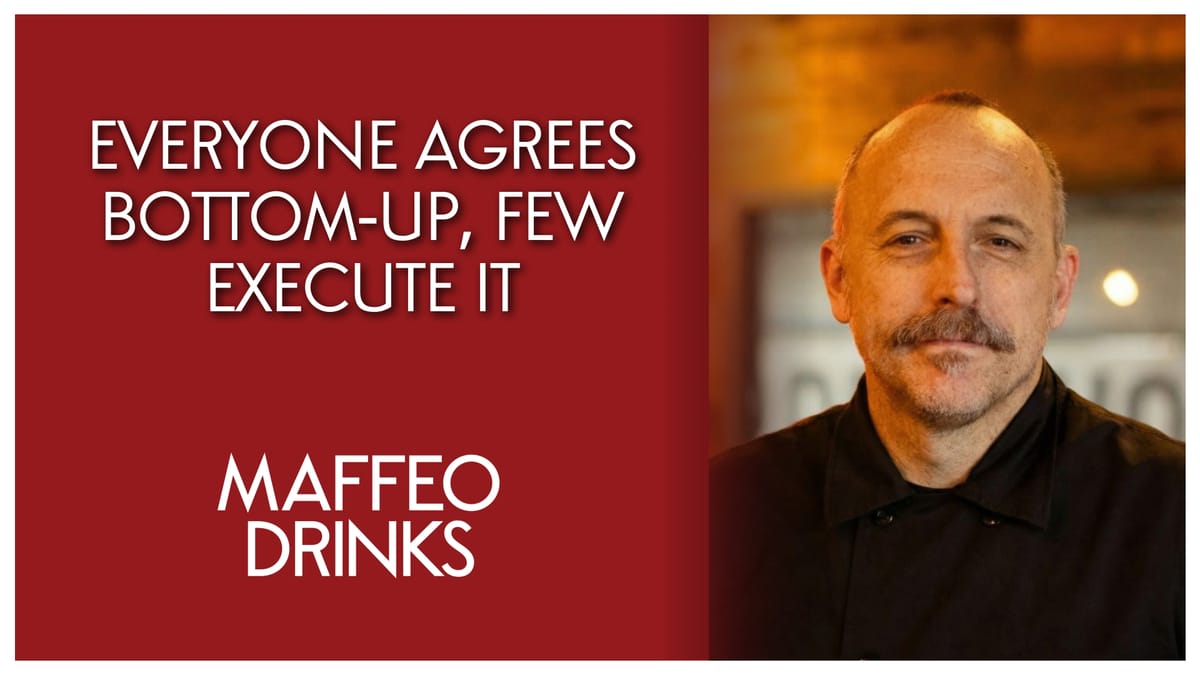
Everyone Agrees Bottom-Up, Few Execute It: Eric Franco on Why Funding Pressure Makes You Skip What You Know Works
From The MAFFEO DRINKS Podcast: Eric Franco reveals why brands burn budget chasing distribution numbers that never convert to velocity, and what bottom-up building actually requires when funding pressure demands shortcuts.
Your field team just got 47 accounts to list your brand.
Three months later, 41 aren't reordering.
You know bottom-up building works. You've seen the evidence. You agree with the principles. But when funding pressure meets immediate gratification culture, execution fails.
The Patterns Burning Budget
Distribution numbers look impressive on investor decks while actual velocity stays flat.
Your VP of Sales can't explain why accounts aren't reordering because you hired them before you mastered selling yourself.
Target wants multi-state presence, so you're expanding to markets you can't properly support.
One failed retail launch just eliminated 25% of your total addressable off-trade market permanently.
You're celebrating 200 distribution points while 80% of your volume comes from 20% of outlets. The big retail opportunity looked like winning but forced operational complexity that undermined everything else.
These aren't separate problems. They're the same pattern: knowing what works versus doing what funding pressure demands.
Listen to the episode :
The Three Years Nobody Wants to Hear About
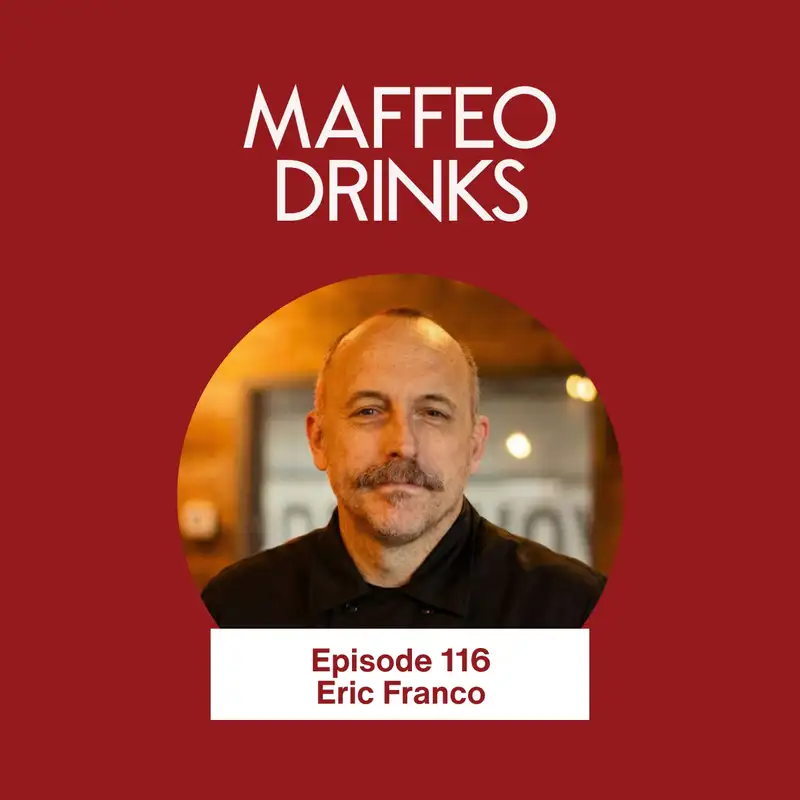
Eric Franco ran his own bar, opening early and closing late, before selling for global brands including SABMiller and Brewdog USA. Working both sides reveals something uncomfortable: the three-year foundation period is real and non-negotiable.
This isn't arbitrary patience.
This timeline reflects how long it actually takes to build genuine consumer affinity and trade relationships. Brands struggling with this timeline are fighting against the actual mechanics of how drinks businesses develop.
Technology created an expectation of instant results. People access everything through phones immediately, and this mentality infects business expectations. Founders expect brand adoption to mirror app downloads when brand building operates on fundamentally different timelines.
Social media amplifies this by creating a survivorship bias museum.
You see Casamigos selling for $1 billion, Aviation Gin acquired by major companies, Aperol Spritz dominating globally. You mentally process these as normal outcomes rather than extreme outliers. You see the 1% that achieved lottery-ticket success, not the 99% that followed similar strategies and failed.
This mental trap creates fundamental misalignment: entering the business with lottery expectations means effort invested never matches results expected. This leads to premature decisions, overspending, and burnout when reality doesn't match fantasy.
Why This Moral Exists
This isn't a recap of the episode. This is the gap between what Eric validated through experience and what's happening in your business right now.
Everyone agrees bottom-up methodology works. The evidence is overwhelming. But when you raise capital based on aggressive projections, you lock yourself into an aggressive execution path regardless of market reality.
The business case may not be sustainable in the time horizon you've committed to, but now the music is on and you have to dance.
This moral exists because knowing bottom-up works isn't enough. Understanding why funding pressure makes you skip what you know works is what separates brands that build lasting value from brands that burn budget chasing metrics that don't translate to sustainable business.
Ready to understand why your approach keeps producing temporary results despite knowing better? Discover how founder-led selling actually works, why premature opportunities become permanent obstacles, how regional focus beats geographic leaps, and what building for legacy instead of lottery actually means.

If the above resonates, it's because you live it every day.
Your stakeholders want numbers. Your team wants direction. Aligning the two? That's where everyone struggles.
I spend 51% of my time in the field. 49% in boardrooms. Both rooms talk to me because I understand what the other one is dealing with.
What follows are patterns from 1000+ practitioner conversations. Things people tell me they'd never say publicly. Principles to navigate your own reality. Not playbooks.
For drinks leadership, serious about seeing clearly. 👇🏻