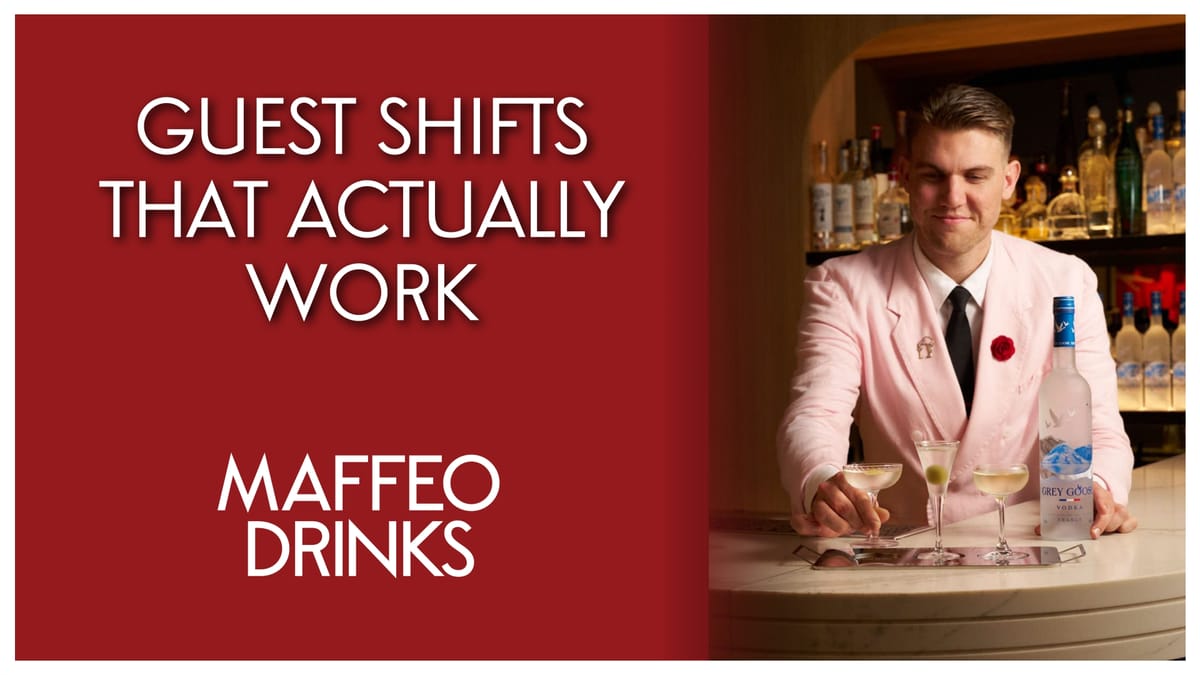
Guest Shifts That Actually Work: How Maybe Sammy's Hunter Gregory Balances Technique and Experience to Scale Cocktail Culture
From The MAFFEO DRINKS Podcast: Hunter Gregory of Maybe Sammy reveals why guest shifts create curiosity without building foundations, how bars close when technical ambition outpaces guest experience, and what scaling cocktail culture person by person actually looks like.
Your brand just wrapped a guest shift activation in three cities. Industry buzz was real. The Drinks Builders who showed up were engaged. Six months later, velocity at home hasn't moved.
You know that consistent, ground-level execution is what builds brands. You've seen it work. You understand the logic. But when the calendar fills with activations and the industry circuit calls, the foundation gets treated as optional.
The Patterns Burning Budget
Your brand ambassador is at every industry event. The accounts they visited three months ago still haven't reordered.
Your cocktail program earns nominations and trade recognition. Your repeat guest rate hasn't improved.
You're running activations in new markets while execution in your home market is still inconsistent.
The guest shift calendar looks full. The bars running those activations aren't featuring your liquid in the drinks guests actually order.
Your menu signals how technically capable the team is. Most guests order the same three classics every time.
You invested in events that create industry relationships. Consumer pull isn't growing alongside them.
These aren't separate problems. They're the same pattern: prioritising what impresses the scene over what builds the foundation the scene runs on.
What the Evidence Actually Shows
Hunter Gregory is the bar manager of Maybe Sammy in Sydney, Australia, a bar that has reached the kind of legacy status where visiting Sydney means going to Maybe Sammy, the same way visiting London means stopping at the Connaught Bar. Hunter was a guest at the Mirror Hospitality Expo in Bratislava, where the energy he brought to the bar floor prompted this conversation about what it actually takes to scale cocktail culture, not just move through the industry circuit.
The episode covers what guest shifts can and cannot do, why technical excellence without guest accessibility doesn't build sustainable bars or brands, and how consumer education actually spreads. Not through mass campaigns. Not through industry awards. Person by person, one excellent drink at a time.
What Maybe Sammy Actually Does
The evidence for how to bridge technical ambition with guest accessibility is right there in how Maybe Sammy designs their menu.
They identify the ten cocktails most requested by their guests. Then they build the entire menu around those ten classics, creating a twist of each one. When a guest walks in and asks for a margarita, the team can respond: "Yes, we have a margarita on our menu. It's taken three days to make using strawberry yogurt, pumpkin bean, and a bunch of other ingredients. Try it. You're going to love it. Then ask what else you can try."
The guest gets their familiar starting point. The bar gets to show them something they'd never have ordered on their own. That's not compromise. That's the sequence that actually builds palates, and builds loyalty, over time.
The pattern the evidence shows: design around what the guest already trusts, then use that trust to take them somewhere new. Designing around what impresses your peers first is what produces menus that stall and guests who quietly order beer.
Why This Moral Exists
This isn't a recap of the episode. It's the gap between what Hunter documents from inside one of the world's most recognised cocktail bars and what's happening across the industry right now.
Guest shifts are useful. Technical ambition matters. Industry recognition has real value. But the evidence from Maybe Sammy and from patterns visible across the bar and brand landscape shows the same thing: none of those things function properly without the foundation underneath them.
Hunter calls it the pie and the cherry. The bar is the pie. The guest shift is the cherry on top. You can't have a cherry without a pie. Running guest shifts before the home bar is consistent is the operational equivalent of celebrating distribution points while velocity stays flat.
This moral exists because the industry keeps optimising for the cherry while underfunding the pie.
Ready to understand how the mismatch between technical excellence and guest experience is quietly closing bars, why most guest shifts aren't creating the consumer pull brands think they are, and what the evidence says about scaling cocktail culture in a way that actually compounds? Discover how the fun, curiosity, and education triangle works, why meeting guests where they are beats pushing them toward where you want them to be, and what Hunter's 15 espresso martinis example reveals about the only kind of growth that actually scales.
If the above resonates, it's because you're living it.
You understand local matters. But you're making expansion decisions based on distributor enthusiasm or market size, rather than systematically identifying cultural fit.
I've spent 20 years observing what works across 30+ markets, 100+ founder conversations, and weekly field validation. What follows are the three predictable mistakes and the systematic approach for avoiding them.
Paid content for Drinks Leaders serious about their work. 👇🏻