Liquid Transparency vs Brand Mysticism: Why Founders Waste $$$ Explaining What Consumers Don't Buy
From The MAFFEO DRINKS Podcast: Winning brands build worlds consumers want to inhabit. Steve Grasse, Guillaume Lambrecht, Alex Ouziel reveal systematic mistakes founders make building narrative for gatekeepers instead of end buyers.
Most founders build brands around what matters to them.
You spent $$$ perfecting your liquid. You documented the production process. You crafted your founding story. You explained the technical innovation.
Six months later, your competitor tells a similar story. Twelve months later, consumers can't tell your brands apart. Twenty-four months later, you're competing on price because you built a brand for yourself, not for them.
I observe founders making three systematic mistakes when building brand mythology. They explain production when consumers buy mystique. They center their biography when consumers buy brand worlds. They impress industry gatekeepers when consumers need emotional connection.
These mistakes waste €300K+ and create brands without souls.
Steve Grasse's approach demonstrates what I observe working across mystical brands. Guillaume Lambrecht's functional-made-desirable positioning. Alex Ouziel's core brand clarity. Their approaches show that mystique creates desire, founder explanations create comparison shopping.
Episodes Referenced:
- 027: Steven Grasse | Brand Mysticism: Creating Winning Brands Bottom-Up
- 117: Steven Grasse | The Spirits Apocalypse and Brand Mysticism Principles
- 107: Guillaume Lambrecht | Making a Functional Category Cool (Supasawa)
- 108: Guillaume Lambrecht | Leveraging Trade Fairs to Drive Demand
- 024: Alex Ouziel | Knowing Your Brand and Sticking To It (9diDANTE)
Understanding that brand narrative matters is easy. Building mythology that survives market correction is hard. Most founders who comprehend storytelling importance still execute transparency playbooks instead of mysticism strategy.
Mistake 1: Leading With Production Story Instead of Consumption Mystique
The scenario: You've developed a breakthrough product. Functional benefits that solve real problems. Technical specifications that outperform everything in category. You lead every conversation with how it's made, where ingredients come from, what makes production unique.
Why this happens: You think transparency creates trust. You believe consumers care about your journey. You confuse what matters to you with what drives purchase decisions.
Steve Grasse calls this missing the atomic structure. The center of the onion represents brand truth. When all factors align correctly, the brand vibrates. That vibration creates attraction.
It's mechanical, not mystical. Get the elements right and the brand resonates.
I observe brands wasting $$$ explaining production when consumers buy the feeling. Hendrick's Gin succeeded not because drinkers understood the distillation process but because the cucumber garnish created simple ritual. The Victorian surrealism packaging. The slightly off-kilter positioning.
The atomic fusion of elements that made it magnetically different.
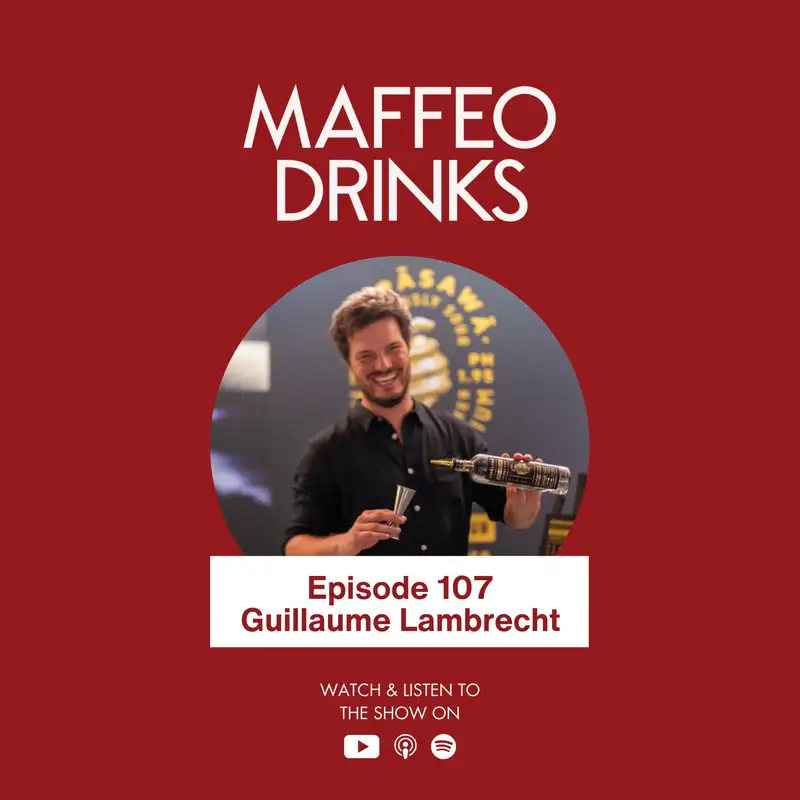
Guillaume Lambrecht faced this with Supasawa. A shelf-stable sour mixer solving real operational problems. Technical benefits: extended shelf life (one year versus two days), batch consistency, workflow transformation. He could have led with production innovation.
Instead, he positioned it as lifestyle enabler. "I can spend two hours more with my family" not "our preservation process uses advanced pH balancing."
The brands that survive market correction have strong cores. During gold rush years, weak foundations didn't matter because everything sold. When demand softens, brands without proper atomic structure collapse. The vibration that makes brands attractive only works when all elements align correctly.
Example: Steve returned to the podcast during what he calls "The Spirits Apocalypse". Structural correction from overproduction, changing consumption habits, craft novelty fatigue. The brands dying are the ones that never built mystique.
They listed botanicals.
They explained terroir.
They showed behind-the-scenes production. But consumers couldn't articulate why they'd pay premium or remain loyal when alternatives appeared.
Tamworth Distillery makes whiskey with beaver castoreum and venison. Critics said "that's not real whiskey." It got Food & Wine Innovator of the Year.
It got press.
It got feet through doors. The brands rigidly focused on traditional production stories are failing. The brands building worlds around their liquids are surviving.
Pattern: The founders who waste €200K lead with transparency. The founders who build lasting brands lead with mystique. Production story supports purchase; it doesn't drive it.

If the above resonates, it's because you're living it.
You understand local matters. But you're making expansion decisions based on distributor enthusiasm or market size, rather than systematically identifying cultural fit.
I've spent 20 years observing what works across 30+ markets, 100+ founder conversations, and weekly field validation. What follows are the three predictable mistakes and the systematic approach for avoiding them.
Paid content for Drinks Leaders serious about their work. 👇🏻